


TMR stands for Total Mixed Ration. It is a balanced diet containing a complete mix of feed types (roughage, concentrates, and supplements) packed with all necessary nutrients (energy, protein, minerals, vitamins, etc.). These components are blended together and fed to cattle simultaneously.
This feeding method has long been widely applied in swine and poultry farming. However, in herbivore livestock production, it has only been introduced more recently due to earlier difficulties in blending roughage with concentrates—a challenge resolved with the advent of modern roughage processing equipment.
To implement the TMR technique, it is essential to first secure a full range of raw feed materials—roughage, concentrates, and supplements—while determining the appropriate feeding ration tailored to each category of cattle.
The technology process and equipment system for TMR processing are as follows:
1. Diagram 1: Mixed feed

Notes:
Small and medium-scale farms can replace certain machinery (such as choppers, mixers, or feed distributors) with manual labor.
Roughage, fresh feed, and supplements can be blended together prior to fermentation.
Once TMR is prepared, it can be fed exclusively, or integrated with a combination of Separate Concentrate Feeding (SCF) and TMR techniques.
2. Diagram 2: Pelleted feed
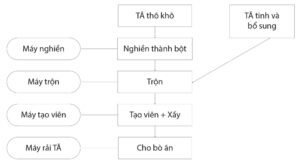
Note: Diagram 2 is typically used for producing pelleted feed specialized for high-yield and specific livestock breeds.
Advantages of the TMR Technique:
Enhances feed intake due to finely chopped, palatable components. Cattle consume the entire ration without sorting or rejecting less palatable feeds because all ingredients are thoroughly mixed.
Delivers balanced nutrition through precise formulation, improving digestibility as processed concentrates pass more slowly through the digestive tract.
Disadvantages of TMR:
Requires specific equipment and machinery, leading to increased energy consumption.
Individual cattle with specific needs (e.g., high-yielding or underweight cows) may not receive customized individual attention.
Source: Author Nguyen Van Thien


